
Union Education Minister Pralhad Joshi announced that revised NCERT textbooks for classes 10 to 12 are being prepared in "mission mode," while textbooks for classes 1 to 9 under the new National Curriculum Framework have already been released. He emphasised NCERT's role in building a 'Viksit Bharat' and highlighted the need for curricula to evolve with AI advancements and the importance of India's young population as a global asset.

The question for the next 20 years is not whether India can become a $5 trillion or $10 trillion economy. Those are attractive targets, but the real question is whether India can create enough productive jobs, educate its children properly, make its cities liveable, and give hundreds of millions of people a substantially better life, asserts Ramesh Menon.

Union Finance Minister Nirmala Sitharaman announced the government's plan to establish a high-powered committee to examine reforms for the banking sector, aligning it with the vision of a 'Viksit Bharat' (Developed India) and India's next phase of growth.

Reserve Bank of India Deputy Governor Rohit Jain has stated that India cannot rely solely on bank balance sheets to fund the extensive investment required for its 'Viksit Bharat' (developed India) goal by 2047, emphasising the critical need for deeper corporate bond, foreign exchange, and derivatives markets.

Prime Minister Narendra Modi, in his 80th Independence Day address, expressed strong confidence that India will achieve developed nation status by 2047, urging citizens to embrace big dreams and unwavering resolve to realise 'Viksit Bharat'. He highlighted India's economic transformation and significant growth in various sectors, including defence production, electronic manufacturing, and mobile phone production.

Can change happen? Not unless the changemakers themselves want it since they benefit the most from the status quo, warns Biswajit Dasgupta.

Prime Minister Narendra Modi has introduced a 'Sapta Dhara' (seven-stream) reform framework, aiming to propel India into a developed nation by 2047. This comprehensive plan focuses on key sectors including manufacturing, agro-food processing, technology, logistics, defence, green and blue economy, and soft power, leveraging the nation's youth potential.

'The real question is how best to leverage technology to deliver better services, all the way to the last mile, where we still haven't been able to get across the financial literacy that can enable us to unlock the potential of the entire country.'

IMF Managing Director Kristalina Georgieva discusses the potential of artificial intelligence to boost global growth, particularly in India, while also addressing the significant risks of job displacement and financial instability.
The third edition of the Viksit Bharat Young Leaders Dialogue (VBYLD) has commenced with a quiz contest, leading to a national finale in January 2027 where young leaders will present their ideas for a developed India to Prime Minister Narendra Modi. The multi-stage event includes essay challenges, district championships, and state-level dialogues, aiming to foster youth participation in nation-building across various thematic areas.
The MY Bharat Youth Convention in New Delhi will host over 6,000 youngsters, featuring interactions with prominent personalities and felicitating emerging talents. Organised by the Ministry of Youth Affairs and Sports, the event aims to empower youth towards the vision of Viksit Bharat @2047. It also celebrates MY Bharat's recent Guinness World Record for youth engagement.

Prime Minister Narendra Modi will host the 'Khelo India Dialogue' to engage with youth on India's sporting journey, national development, and Olympic aspirations. The virtual event, structured around five key themes including sports ecosystem improvement, youth leadership, and a 'Nasha Mukt Yuva' movement, aims to gather ideas for a stronger, youth-led 'Viksit Bharat' and nurture talent for the 2036 Olympics.

Sources said a 100-day agenda for immediate steps to be taken after a new government is formed in May was deliberated upon during the meeting for its quick implementation.

The BJP has announced a month-long 'Seva Sankalp Abhiyan' campaign, starting on Prime Minister Narendra Modi's birthday, September 17, to commemorate his 25 years in public life. The initiative includes various programmes like 'Seva Diwas', 'Ashirwad Ka Diya', 'Seva Jyoti Kalash Yatra', youth yatras, and innovation challenges, all aimed at public participation and promoting the vision of 'Viksit Bharat 2047'.

The poll authority had received several complaints that such messages highlighting the government's initiatives were still being delivered on citizens' phones despite the announcement of the General Elections 2024 and the MCC coming into force.
MY Bharat, the flagship youth engagement platform of the Department of Youth Affairs, has been awarded a Guinness World Record for the 'Most Users to Take an Online Quiz in One Week' through its Viksit Bharat Young Leaders' Dialogue Quiz, engaging over 390,000 participants.

Prime Minister Narendra Modi will launch a 100-week nationwide campaign, 'Nasha Mukta Yuva for Viksit Bharat Sankalp Abhiyaan', on August 2 to combat rising drug abuse in India. Led by MY Bharat youth, the initiative will involve various activities and aims to unite over one crore young people in a pledge against substance abuse, addressing alarming statistics from the Narcotics Control Bureau.

A Niti Aayog report reveals that an estimated 8.7 crore Indian youth aged 15 to 29 are not engaged in education, employment, or training (NEET), underscoring the critical need for subsidised training programmes focused on self-employment and emerging sectors.

Prime Minister Narendra Modi has outlined a comprehensive plan to empower India's youth, including training one crore youngsters in artificial intelligence skills and providing free online coaching for competitive examinations, aiming to position them at the forefront of the nation's journey to become a developed nation by 2047.

Making India a developed nation by 2047 is an ambition of every Indian, and states can play an active role in achieving this aim as they are directly connected with the people, Prime Minister Narendra Modi said on Saturday. Modi is chairing the 9th Governing Council meeting of NITI Aayog.

For the first time in history, the national song 'Vande Mataram' will be sung at the Red Fort during Independence Day celebrations on August 15.
Congress MP Shashi Tharoor tagged a post of a person raising the issue of privacy over the prime minister's letter being received by persons living abroad.
Maharashtra Governor Jishnu Dev Varma has urged state universities to establish a robust sports-friendly ecosystem to identify and develop exceptional sports persons capable of representing India. He highlighted the importance of sports in national development and student skill-building, advocating for greater participation from rural and tribal youth.

The National Skill Development Corporation (NSDC), in collaboration with Amazon Web Services (AWS) and Cultus Education, has launched a nationwide initiative to provide cloud and AI skilling to 1.5 lakh learners. This programme aims to equip youth, especially from Tier 2 and Tier 3 cities, with essential technology skills and job-ready training, contributing to India's goal of becoming a global innovation hub.

For the first time in Independence Day celebrations, 'Vande Mataram' will be rendered at the Red Fort complex during the 79th anniversary on August 15, followed by the recitation of the National Anthem, marking 150 years of the National Song's legacy.

Prime Minister Narendra Modi on Sunday asked the country's youth to take a pledge against substance abuse, saying drugs can give them a "high" for some time, but would make their entire career and personal life "low".

Finance Minister Nirmala Sitharaman's Budget proposals lay out a comprehensive road map for transforming India into a developed nation, focusing on key priorities that aim to generate ample opportunities for all citizens in "Viksit Bharat". It sets the stage for sustained economic growth, social development, and technological advancement.
Economists highlight that resolving domestic policy bottlenecks, particularly through land reforms and improving the ease of doing business, will be critical for Prime Minister Narendra Modi's 'next-generation reforms' and India's economic transformation towards its 'Viksit Bharat' vision for 2047.

Prime Minister Narendra Modi has urged states to balance the opportunities presented by artificial intelligence with the need to safeguard against social challenges like cyber fraud and drug abuse. He also warned of the risks posed by El Nino conditions, calling for stronger water conservation measures and emphasising the collective resolve towards a 'Viksit Bharat'.
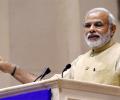
Prime Minister Narendra Modi, in his Independence Day address, highlighted technology and innovation as central to India's goal of becoming a developed nation by 2047. He called for India to lead in emerging technologies like AI, quantum computing, and space, announcing a massive AI skilling initiative for one crore youth. Modi stressed the importance of becoming a global innovation hub, bolstering energy security with nuclear power, and strengthening cybersecurity.
Over 6,000 young people from diverse backgrounds participated in the MY Bharat Youth Convention in New Delhi, interacting with Sports Minister Mansukh Mandaviya and other dignitaries. The convention highlighted the crucial role of youth in nation-building and underscored India's significant demographic advantage.

Indian National Developmental Inclusive Alliance (INDIA) MPs, including Congress president Mallikarjun Kharge, Congress Parliamentary Party chief Sonia Gandhi and Leader of Opposition in the Lok Sabha Rahul Gandhi, staged a protest in Parliament premises on Wednesday over the alleged discrimination against opposition-ruled states in the Union Budget.

NITI Aayog's inaugural Investment Friendliness Index, scoring 36 states and Union Territories on 84 indicators across eight pillars, revealed that no state or UT reached a score of 60 out of 100, indicating significant room for improvement in attracting investment.

The West Bengal government will resume the rural employment scheme under the Viksit Bharat-Guarantee for Rozgar and Ajeevika Mission (Grameen) Act in all districts of the state, barring Murshidabad and South 24 Parganas, where allegations of irregularities in its implementation are being investigated.

Elections are not won or lost by expounding on such macro-economic matters. For the aam admi, what matters in manifestos are promises that will improve their quality of life, notes Vinayak Chatterjee.

Former Chief Economic Adviser Krishnamurthy V Subramanian outlines India's strategy to become a USD 55 trillion economy by 2047. The plan hinges on leveraging its young demographic in AI, dominating sunrise sectors like space and defence tech, attracting FDI, and achieving sustained 8% GDP growth.
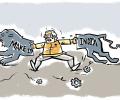
RRP Electronics and Orvis Semi Pvt Ltd have formed a strategic partnership to develop and manufacture low-light imaging sensors for defence, surveillance, and security in India. This collaboration aims to reduce reliance on imports and bolster India's semiconductor and defence electronics ecosystem under government initiatives like Make in India.

A research paper by the National Council of Applied Economic Research (NCAER) recommends that Bihar revoke its alcohol ban, citing its failure to reduce violence against women and a rise in illicit drug and alcohol consumption. The report suggests that reinstating the liquor excise tax would significantly increase state revenues and decrease enforcement costs.

Prime Minister Narendra Modi has surpassed Jawaharlal Nehru's record to become India's longest-serving democratically elected Prime Minister. He expressed gratitude to President Droupadi Murmu, NDA chief ministers, Vice President C P Radhakrishnan, and Lok Sabha Speaker Om Birla for their wishes, attributing his achievements to the collective efforts and aspirations of 140 crore Indians and reaffirming his commitment to a 'Viksit Bharat'.
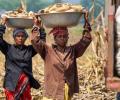
The Centre has announced that the Viksit Bharat -- Guarantee for Rozgar and Ajeevika Mission (Gramin) Act will come into force across the country from July 1, replacing the Mahatma Gandhi National Rural Employment Guarantee Act.
